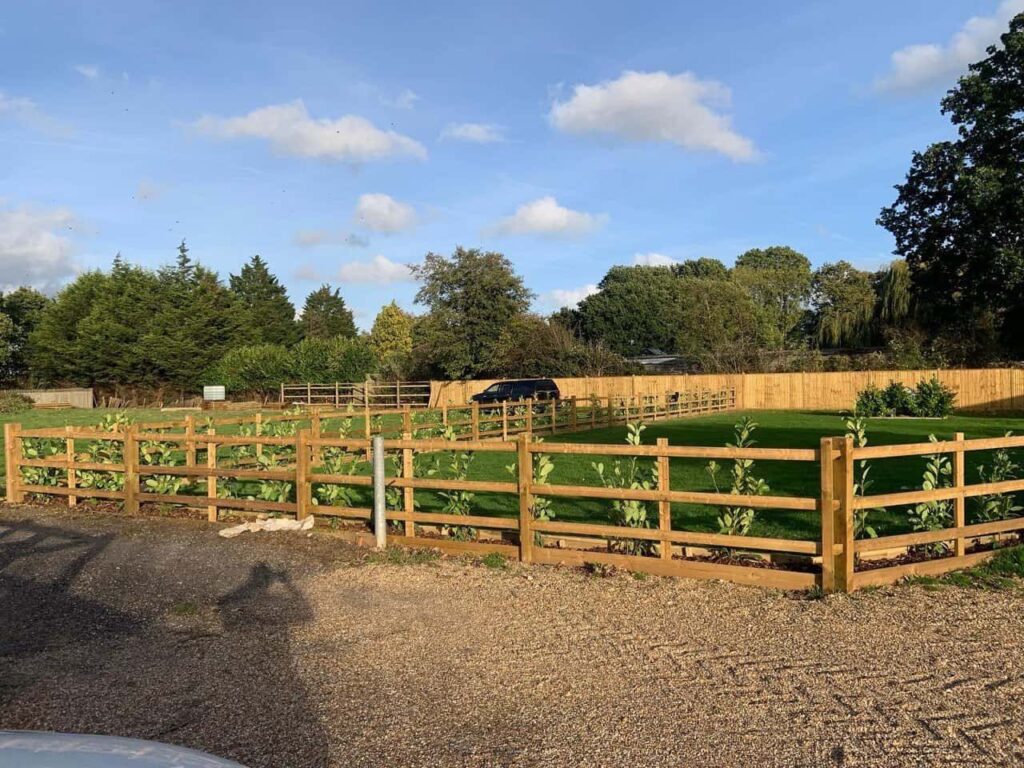
Why Is Post and Rail Fencing a Practical Choice for Larger Properties?
Larger properties often need clear boundary definition without the enclosed appearance of solid fencing. The chosen fence may need to cover a substantial distance, follow changing ground levels and remain visually appropriate within an open setting.
Post and rail fencing meets these requirements through a straightforward construction of upright posts connected by horizontal timber rails. When professionally planned and installed, it can create an attractive, durable and practical boundary for larger gardens, fields, paddocks and extensive outdoor areas.
What Makes Post and Rail Fencing Suitable for Larger Boundaries?
The simplicity of post and rail fencing is one of its main strengths. However, dependable performance still relies on suitable materials, accurate spacing and firm installation.
It Defines Boundaries Without Closing Off the View
Solid fence panels can make a large outdoor space feel divided or enclosed. Post and rail fencing establishes a visible boundary while preserving views across the property.
Its open design allows light to pass through and helps different areas remain visually connected. This makes it particularly useful where the purpose of the fence is to define land rather than create complete privacy.
The Design Complements Open Spaces
Timber posts and rails have a natural appearance that works well alongside lawns, planting and open ground. The clean horizontal lines create an orderly boundary without becoming the dominant feature of the landscape.
A well-planned fence can follow the shape of the land and reinforce the layout of the property. Corners, entrances and changes in direction should be considered carefully so that the finished installation looks consistent.
It Can Follow Long or Irregular Boundaries
Larger plots rarely have perfectly straight, level boundaries. Ground may rise, fall or curve, while existing trees, access points and other features can affect the route of the fence.
Post and rail construction can be adapted to these conditions. Individual posts are positioned to follow the intended boundary, with rails fitted between them to create a continuous line.
A site assessment is important before installation. This allows post locations, changes in level and turning points to be planned rather than adjusted unevenly as work progresses.
Different Rail Configurations Suit Different Uses
Post and rail fencing can be installed with different numbers of horizontal rails. The appropriate configuration depends on the purpose of the boundary, the size of the enclosed area and the level of separation required.
Closer rail spacing may provide a more substantial visual barrier, while a simpler arrangement can be sufficient for general boundary definition. Where smaller animals or additional containment are considerations, suitable wire mesh may be attached to the timber framework.
The design should be selected for the actual use of the property rather than appearance alone.
Correctly Installed Posts Provide Essential Strength
The posts are the foundation of the entire fence. If they are too shallow, poorly aligned or installed in unstable ground, the rails may sag and the boundary can begin to lean.
Post depth and spacing should take account of ground conditions, exposure and the overall layout. End posts, corner posts and gate posts often experience greater pressure than intermediate supports and may require additional consideration.
Professional installation helps ensure that these load-bearing points are set securely and that the rails remain properly supported.
Repairs Can Often Be Localised
One practical advantage of post and rail fencing is that individual components can often be repaired or replaced. A damaged rail may not require the surrounding fence to be dismantled if the posts remain stable and the neighbouring timber is in sound condition.
Before carrying out a repair, the cause of the damage should be established. A broken rail may result from impact, but it could also indicate that posts have moved or the timber has deteriorated.
Checking the complete section prevents a visible repair from overlooking a deeper stability problem.
It Can Be Integrated With Gates and Access Points
Larger properties commonly require vehicle entrances, pedestrian gates or access between separate areas. Post and rail fencing can be planned around these openings to create a clear and practical layout.
Gate posts must be positioned and supported correctly because they carry additional weight and experience repeated movement. The surrounding rails should align neatly with the gate so that the entrance appears integrated rather than added later.
Planning access points before installation also helps avoid inconvenient routes or unnecessarily narrow openings.
Routine Care Supports Long-Term Performance
Timber fencing is continuously exposed to rain, sunlight, wind and changing temperatures. Regular inspection can identify movement, damaged rails and early timber deterioration before these issues spread.
Useful maintenance includes:
- Checking posts for leaning or movement
- Inspecting rails for splits and loose fixings
- Keeping soil and vegetation from building up around timber
- Preventing climbing plants from placing excessive weight on rails
- Addressing impact damage promptly
- Applying appropriate timber treatment when required
Particular attention should be given to corners, entrances and lower areas where water may collect.
Professional Planning Prevents Common Problems
Although post and rail fencing has a simple appearance, accurate installation makes a substantial difference. Uneven post spacing, poorly joined rails and inadequate support can reduce both its strength and appearance.
A professional installer can assess the ground, measure the boundary and plan how the fence will respond to slopes, corners and access points. This produces a more consistent result suited to the specific property.
Conclusion
Post and rail fencing is a practical choice for larger properties because it defines extensive boundaries without restricting views or making open spaces feel enclosed. It can accommodate varied layouts, integrate with gates and be adapted to different boundary requirements.
The quality of the posts, materials and installation will determine how well the fence performs over time. If you are considering post and rail fencing in Swanley, Kent, Fast Fix Fencing Swanley can assess your property and recommend a suitable layout. Contact the team to arrange a professional site assessment.
Call us on: 01322 952 295
Click here to find out more about Fast Fix Fencing Swanley
Click here to complete our contact form and see how we can help with your fencing needs.